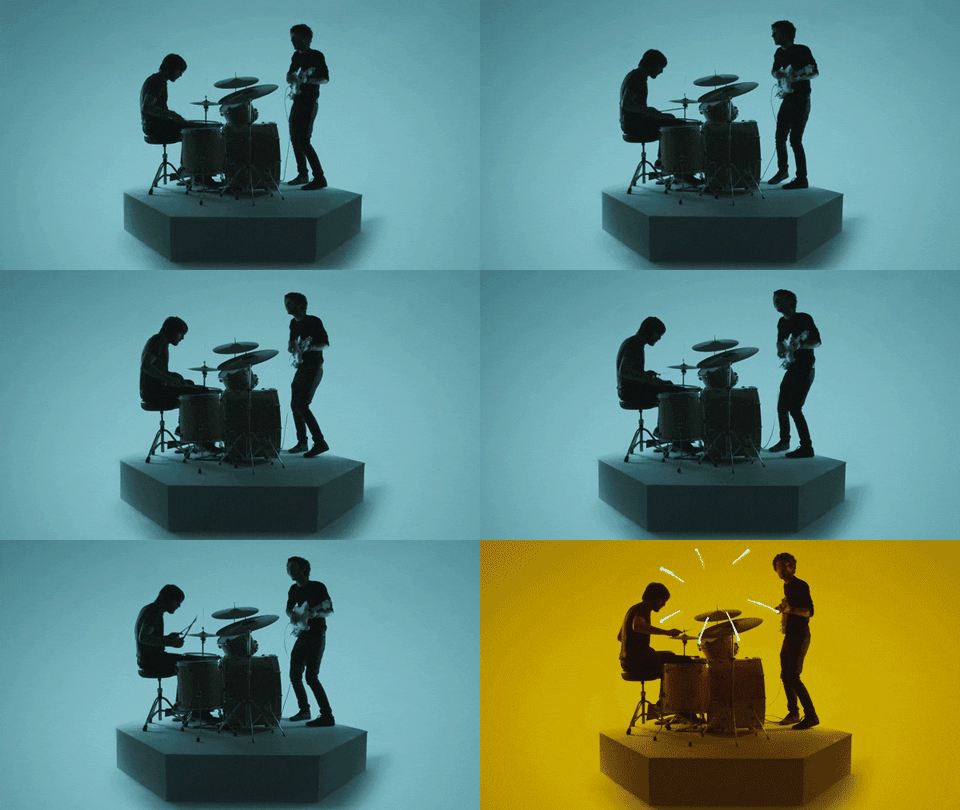
One thing we always enjoy hearing about here at IMVDb is music videos where the artist and the director have a really collaborative, hands-on process. If a music video involves an entire band and director taking a day to hot glue a tiny set together using cardboard and playing cards, even better. Director Austin Vesely found himself doing this with Chicago band Kids These Days while making the video for "Doo Wah," and the result is a great video (with a tragic ending). We talked to Austin about glue guns, shooting green screen for the first time, and making music videos in Chicago.
Doug: How did you get involved with the project? Did you have a personal relationship with Kids These Days given that you all are from Chicago?
Austin: Yeah, I actually have had a long working relationship with Kids These Days going back a little more than a year. Straight out of the gate I went on tour with them, so it was a trial by fire meeting. Being in a van with people for several hours at a time is a pretty good to way to get to know them. We have been working together ever since then. I've been doing live videos for them, going on tour, and this will be our third music video together.
Doug: How does this project compare to some of those other projects?
Austin: The last one we did together was a video called "Don't Harsh My Mellow" which was a really large production. We had a big crew and pretty sizeable budget. Doo-Wah was scaled back down and was as minimal a crew as you can get, being that I was the only crew member. The band helped with constructing the sets as well. It was a lot smaller and more intimate. We got to put all of our own stamps on it in that way.
Doug: What was the process behind creating the miniature world thats in the video?
Austin: The concept originally came from Vic Mensa, who is the rapper in the band. He came to me and he said he wanted the band to be tiny people in a big house. We started talking about it and figuring out what scenarios would be cool visually. I came up with this idea for the members of the band to have their own little villages in this big house that they made out of paper, and then they burn each others villages down. Eventually, we decided I would be the character who burned down everybodys village. I'm actually the person knocking on the door and throwing the cigarette and stuff. When it came to actually building the stuff, we just spent a day doing it, me and just about all the members of the band. We all got together and started making the village. We all just started making our own buildings that we thought were cool. It was neat because everyone got to put their own personality into the environment that the characters would be living in.
Doug: It's cool that the band was actually in there helping you, was it basically just hot glue guns flying around everywhere?
Austin: It was exactly that. We had hot glue guns and craft supplies, a bunch of cardboard. Liam, the guitar player, had just moved into that house that the basement is in, so we already had a bunch of cardboard and stuff.
Doug: Was everything really specific on what you were trying to get when shooting the band green screen stuff? Or did you guys have the tiny set nearby for reference to allow for some improvisation?
Austin: I had never shot anything green screen before, so it was a huge risk. I just had to go in and tell them that I knew what was doing, and tell myself that I knew what I was doing. The process was to spend the first day shooting all the slate, so I shot all the little sets. When we got to the green screen studio, I had my reference shots from the day before dictating what to shoot, so there wasn't a whole lot of room for improv. The village set still existed, so we could have gone back and shot a new slate if one of the composites didnt work, but luckily pretty much everything we did worked out just by eyeballing it.
Doug: Some artists have trouble looking natural performing their own songs on camera, let along pulling off green screen pantomiming. How were Kids These Days as on camera performers?
Austin: They were good. I think it's nice that we've had this long working relationship because it makes it really easy, I'm never too timid about asking them to do things if I need them to do stuff differently. I wanted the performances in the video to be slightly faster to look a bit more surreal, so I actually had them performing to a version of the song that was like 30% slower, so it sounded awful. They were just miming their instruments in slow motion, and it was really kind of silly and terrible to listen to, but they were really good sports about it.
Doug: You mention your close relationship with the band makes you more comfortable when asking them to do things. Does that comfort level work both ways to the point where members of the band are able to ask more of you?
Austin: Yeah, it works both ways. I can request more of them, and they have no hesitation of requesting more of me. I work really, really tightly with Vic, and he's a real perfectionist. We butt heads a lot, but he's a really great collaborator because he has a very distinct vision for stuff he wants.
Doug: Near the end the band is performing on a copy of The Second City Unscripted. Was this more a nod to Chicago, or did that book have more of a significance?
Austin: We were looking for something that would work as a stage, and we happened to come across the Second City book, so we thought why not put a little love in there for Chicago. Kids These Days is a Chicago band, through and through.
Doug: This question isnt specific to this one video, but Im curious, do you find that there is a music video community out there in Chicago?
Austin: Yeah, it's an interesting scene out here. There is a really vast and quickly growing hip-hop scene in Chicago. Complex magazine just put this thing out recently, and one of the things on it was, "if you don't make a music video for your song, it doesn't exist." I thought that was really interesting, because it gets to feel that way. There is a strong community and people that I like to collaborate with, and I like to keep up with their stuff. There is more out there now, so there is going to be more bad stuff, too. But there is a good community, and there is really a lot of music videos coming out, so you always want to challenge yourself to keep making stuff that is going to be interesting and stand out in some way.